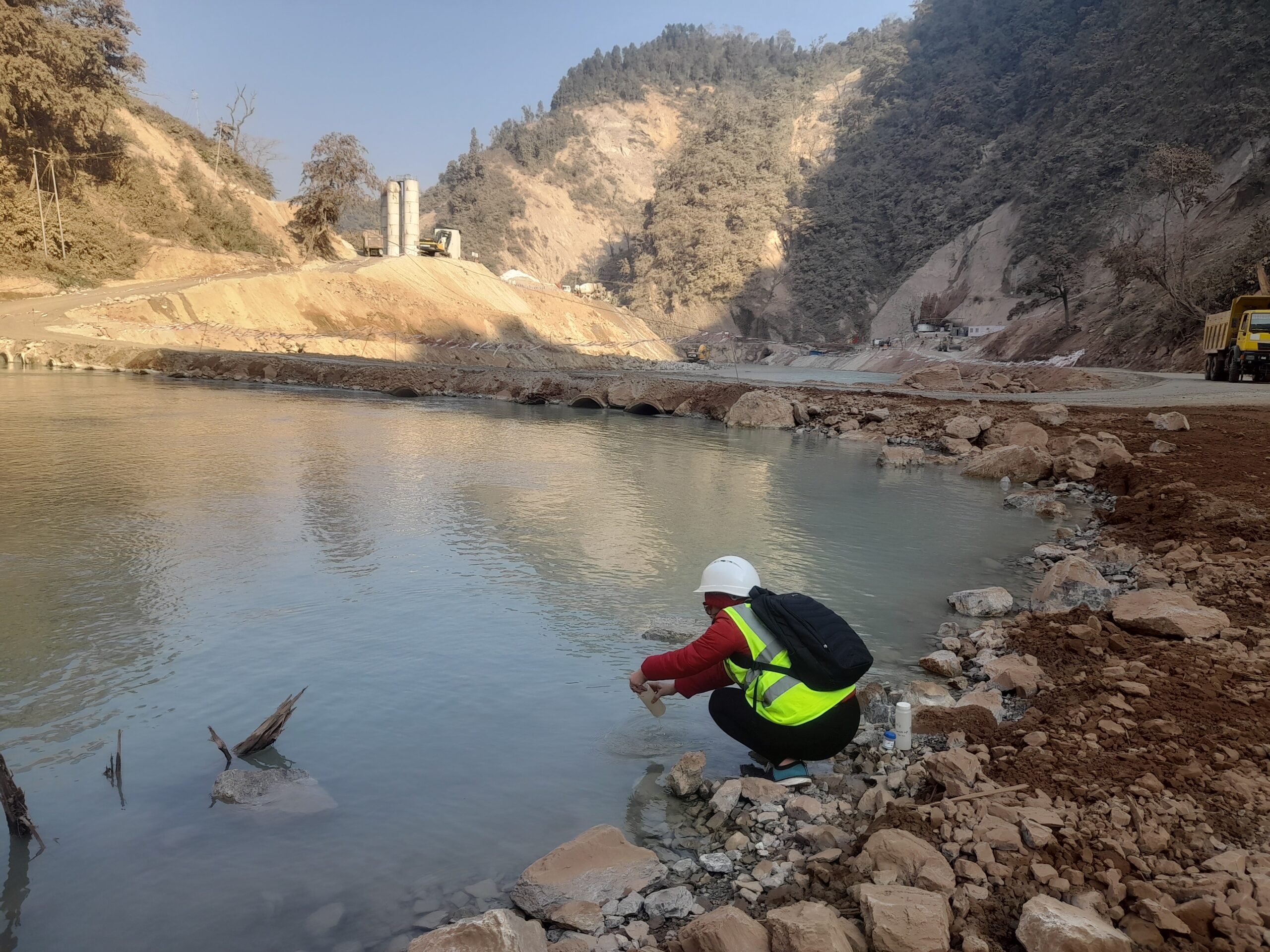
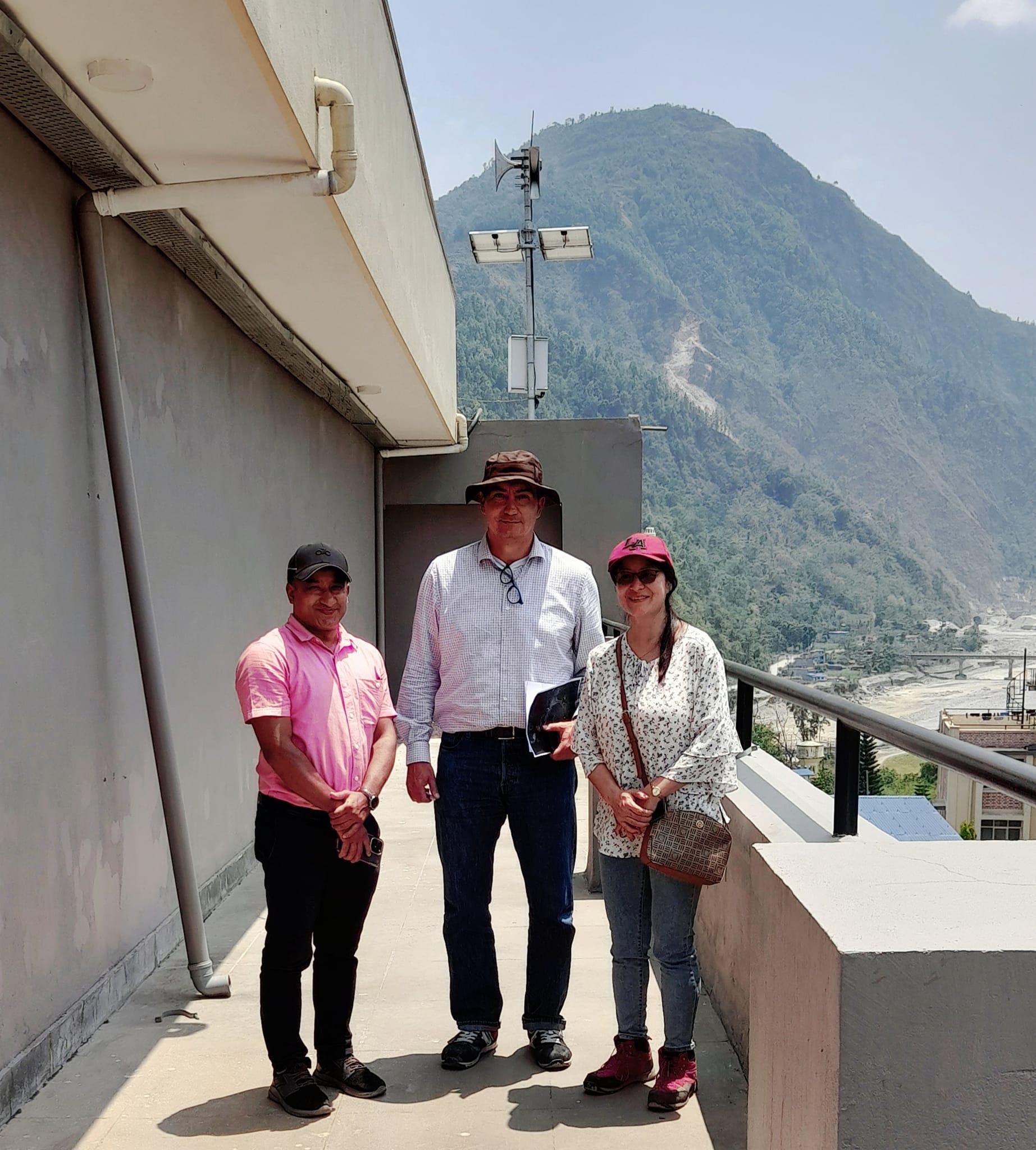
Tanahu Hydropower Limited (THL) is a subsidiary company of Nepal Electricity Authority (NEA) established in 2012 to develop the 140 MW Tanahu Hydropower Project (“the Project”) (formerly, Upper Seti (Damauli) Storage Hydroelectric Project). The Project site is 150 km west of Kathmandu on Seti River near Damauli of Tanahu District in Gandaki Zone. The project is a storage-type plant capable of supplying peak power for a minimum of 6 hours daily. Below fig 1,2,3 shows the sampling sites under environmental monitoring of Tanahu Hydropower project.
The water quality analysis of all the river sites (except spring source) are within the acceptable limit except turbidity and fecal coliform. However, all the parameters of spring source are within acceptable limit. The presence of fecal bacteria may be due to natural or anthropogenic activities. These bacteria are present in the digestive tract of warm-blooded animals including humans and are found in their wastes. Hence the presence of fecal coliform bacteria in river water indicates that the water has been contaminated with the fecal material of human beings or other warm-blooded animals. The presence of fecal contamination is an indicator that a potential health risk exists for individuals exposed to this water. Fecal coliform bacteria can enter rivers through direct discharge of waste from mammals and birds, from agricultural and storm runoff, and from untreated human sewage. Individual home septic tanks can become overloaded during the rainy season and allow untreated human wastes to flow into drainage ditches and nearby waters. Agricultural practices such as allowing animal wastes to wash into nearby streams during the rainy season, spreading manure and fertilizer on fields during rainy periods, and allowing livestock watering in streams can all contribute fecal coliform contamination. Some waterborne pathogenic diseases include ear infections, dysentery, typhoid fever, viral and bacterial gastroenteritis, and hepatitis A. The presence of fecal coliform tends to affect humans more than it does aquatic creatures, though not exclusively.
The water quality analysis of jar water, inside camp tap water and labor camp tap shows that all the parameters are within the acceptable limit however, there is slight presence of total coliform in all the water samples. These bacteria are naturally present in the environment and so might have contaminated water samples. Total coliform bacteria are not likely to cause illness, but their presence indicates that these water samples may be vulnerable to contamination by more harmful microorganisms.
The air quality analysis of study sites shows that all the parameters are within the acceptable limit, however power house area show slight increase in PM2.5. The level of particulate matter might be high due to machinery work going on the study sites. The rest of the area has better air quality, most probably due to drizzle during field visit. Particles that are 2.5 microns or smaller are considered especially dangerous to human health because they bypass many of our body’s defenses. Nose hair, mucus, and other defenses work to catch these smaller particles before they enter deeper into our bodies. Secondary PM2.5 particles, however, are formed when different chemicals combine in the air. Chemicals from coal power plants or automobile exhaust can react with water vapor in the atmosphere and sunlight to form new particles or compounds, and these particles can be under 2.5 microns in size. A prolonged exposure to PM2. 5 can cause permanent respiratory problems such as asthma, chronic bronchitis and heart disease.
PM10 and PM2.5 often derive from different emissions sources, and also have different chemical compositions. Emissions from combustion of gasoline, oil, diesel fuel or wood produce much of the PM2.5 pollution found in outdoor air, as well as a significant proportion of PM10. PM10 also includes dust from construction sites, landfills and agriculture, wildfires and brush/waste burning, industrial sources, wind-blown dust from open lands, pollen and fragments of bacteria.
Both PM2.5 and PM10 can be inhaled, with some depositing throughout the airways, though the locations of particle deposition in the lung depend on particle size. PM2.5 is more likely to travel into and deposit on the surface of the deeper parts of the lung, while PM10 is more likely to deposit on the surfaces of the larger airways of the upper region of the lung. Particles deposited on the lung surface can induce tissue damage, and lung inflammation. A number of adverse health impacts have been associated with exposure to both PM2.5 and PM10. These adverse health effects have been reported primarily in infants, children, and older adults with preexisting heart or lung diseases.
The noise level analysis of all study sites indicates that except dam site, all other sites exceeds the normal day time average range which might be due to machinery activities, heavy vehicle movements, use of heavy equipment going on during field visit.
The Nepal government has set the standard of permissible exposure limit for noise at workplace. The standard to this effect was published by the Ministry of Finance in the Nepal Gazette April, 2017. Section 36 of the Labor Act, 1992 has vested on the government the power to determine the standards of safety at workplace. According to the notification published in the Nepal Gazette, these limits are based on an eight-hour time weighted average. With noise, the PEL is 90 dBA for all workers for eight-hour day. Occupational noise-induced hearing loss is the development of hearing loss because of exposure to high levels of noise.
Based on above Nepal Government standard of PEL for noise at workplace, all the exceeded sites fall under safe level.