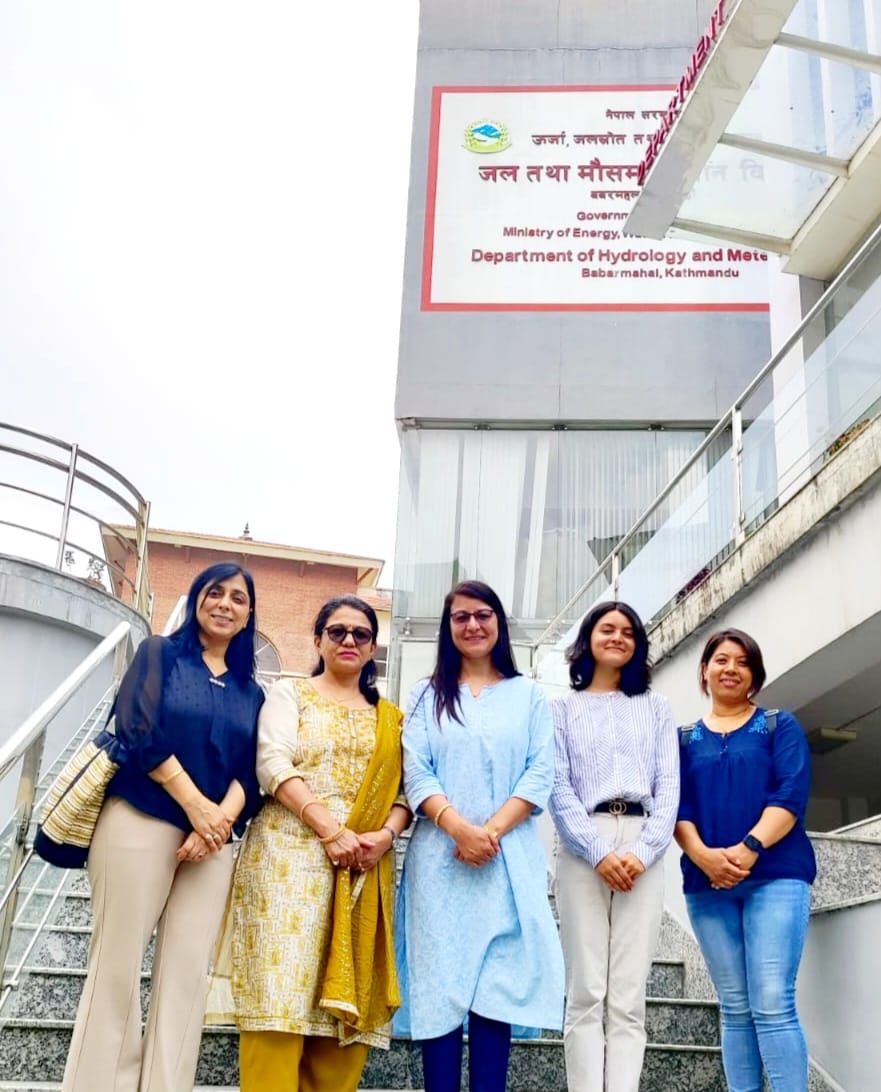
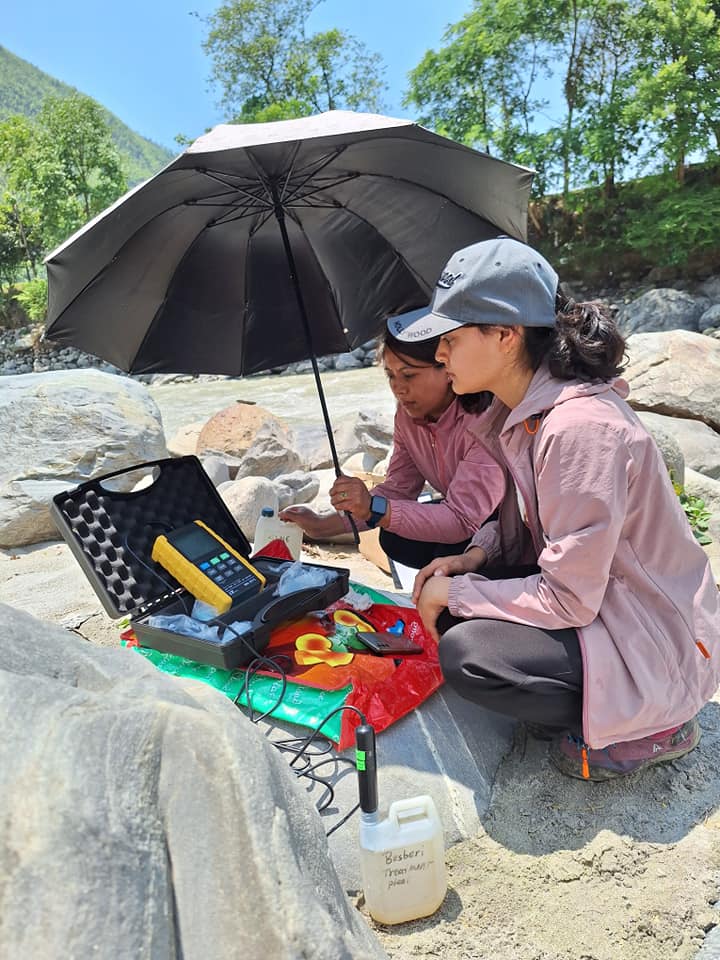
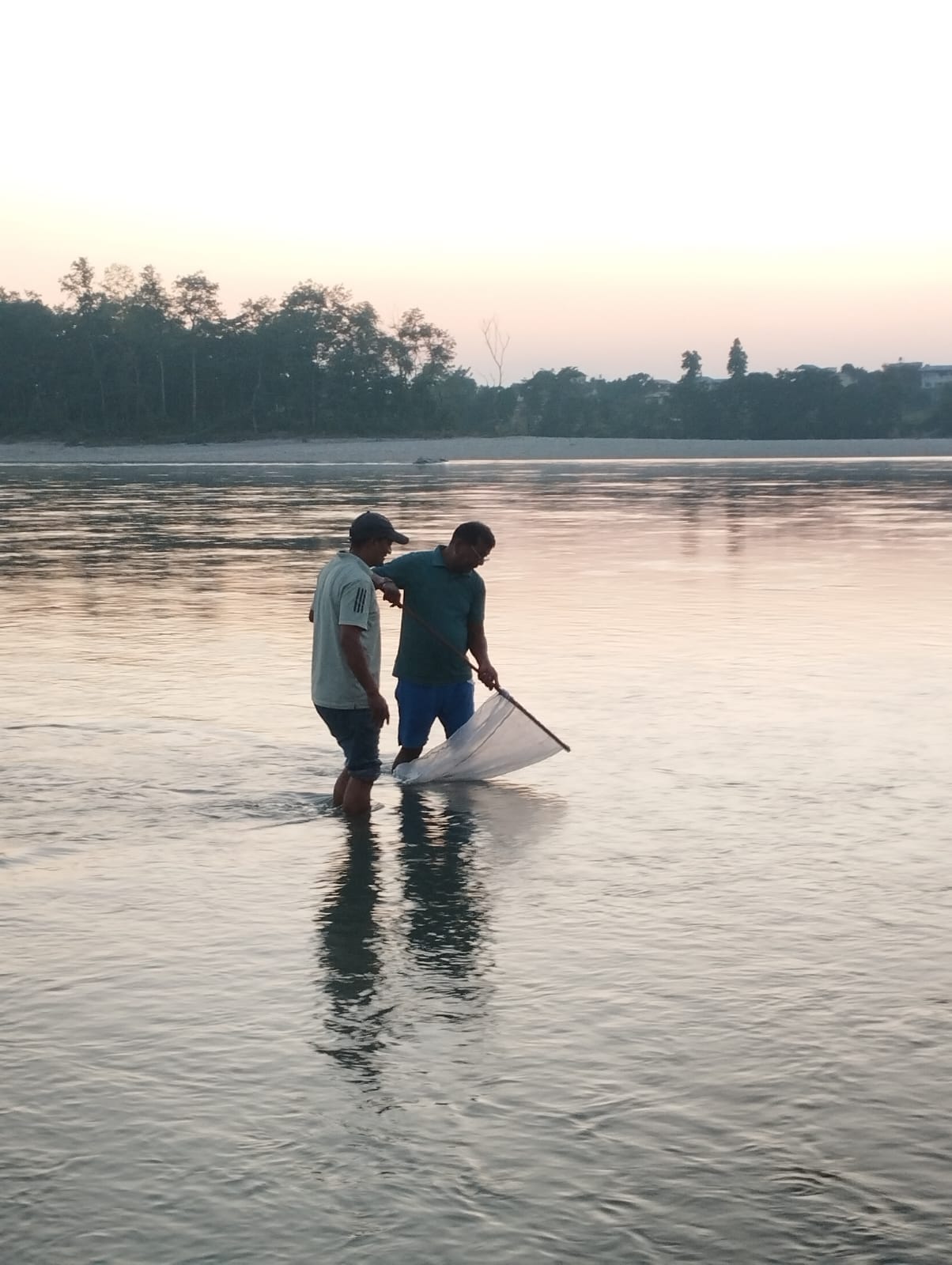
The “Water Quality Measurement study “project has been completed successfully by #DHM #RITI-LLEP. Thank you everyone for your direct and indirect support.
The Department of Hydrology and Meteorology (DHM) under the Ministry of Energy Water Resources and irrigation, Government of Nepal, has been monitoring the water quality of water surface bodies and spring sources for a long time. The consulting service provided by DHM to RITI-LLEP (JV) aimed to conduct a comprehensive water quality monitoring study across major natural surface water bodies in Nepal, focusing on different months and sites. Specific objectives included collecting data on physical, chemical, and biological parameters, analyzing it concerning the surrounding environment, and assessing pollution levels through macroinvertebrate analysis. The study emphasized the importance of understanding and mitigating water pollution for the preservation of aquatic ecosystems and public health. 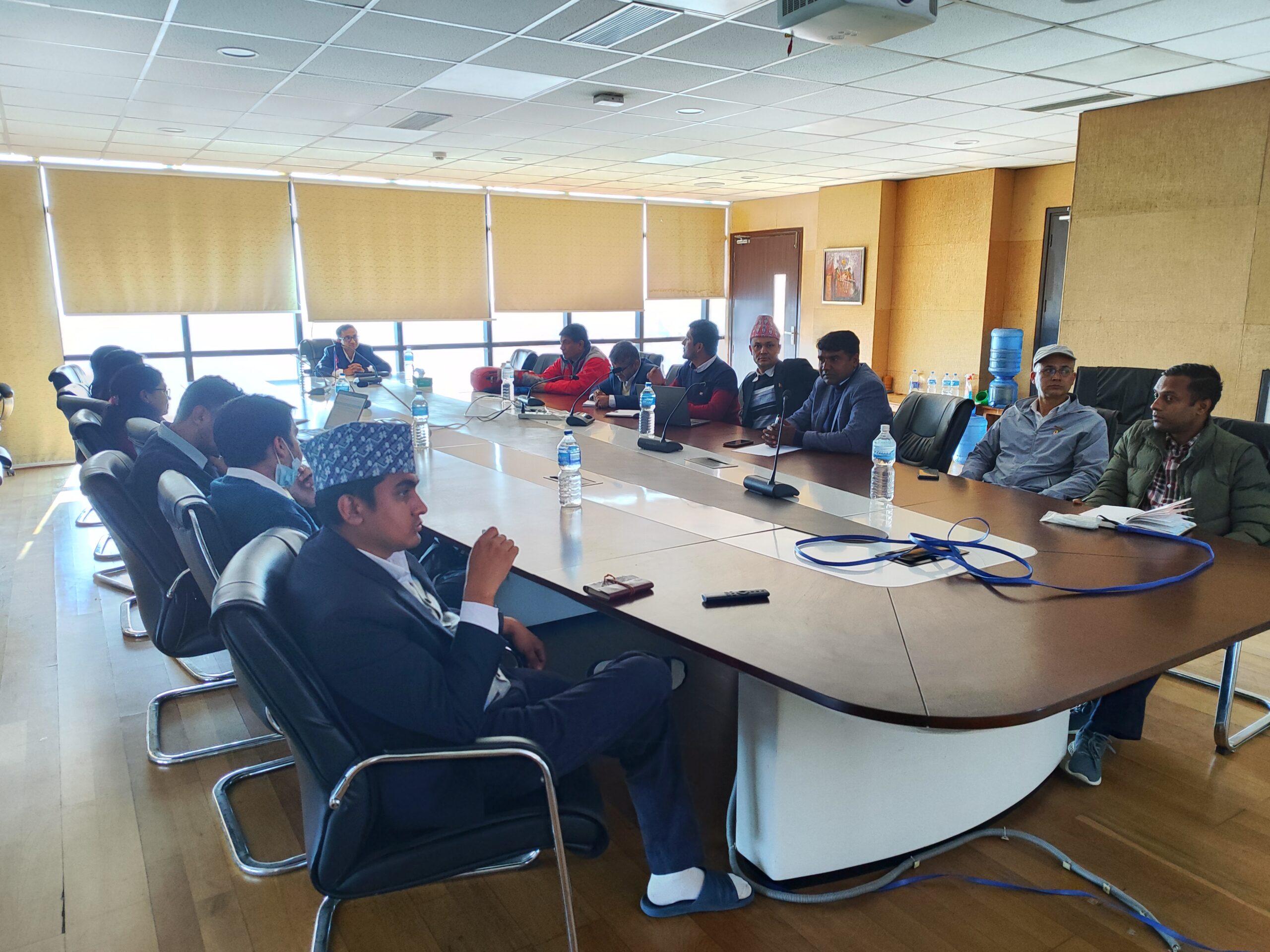 The study focused on analyzing physical, chemical, and biological parameters to assess environmental conditions and identify sources of pollutants. The report analyzed data from 17 water bodies Kankai (Mainachuli), Arun (Turkeghat), Tamor (Mulghat), Saptakoshi (Chatara), Sunkoshi (Kampughat, Dolalghat), Dudhkoshi (Rabuwaghat), Likhu (Sanghutar), Tamakoshi (Busti), Bagmati (Khokana, Padherodovan, Bhorleni), Marsyangdi (Bhakunde besi), Budhiganga (Arughat), Trishuli (Betrawati) and Narayani (Devghat) ,and 5 spring source sites at Helambu (Tatopani Changamul), Sailung ( Lapsing Mahavir, Mrigasthali) and Tache, Manang (Ghatte khola, Danaque) considering temporal and spatial variations.
This study indicates that while many rivers comply with most NDWQS parameters, issues with turbidity and coliform levels are seen. Rivers such as the Saptakoshi show relatively good health, whereas the Bagmati at Khokana and Padherodovan exhibit severe pollution, necessitating immediate action to protect aquatic ecosystems and public health.
The comprehensive water quality monitoring study has highlighted several critical issues and provided actionable recommendations to ensure the preservation of aquatic ecosystems and public health. The study’s key findings and recommendations are continuous monitoring of water quality, addressing specific issues such as high total coliform, E. coli, and low dissolved oxygen levels, particularly in rivers like Khokana which need urgent attention. The action required are implement measures to mitigate the pollution sources including untreated sewage discharges, agricultural runoff, and industrial effluents effectively; educate local communities about the importance of maintaining river water quality and the health risks associated with high coliform levels; encourage residents to avoid activities that contribute to pollution and promote responsible water use practices.